
Chronic pain in knee osteoarthritis – emerging interventions and opioid stewardship
Knee osteoarthritis affects over one million people in Australia and is a leading cause of chronic pain, disability and reduced quality of life. Management requires an individualised, multidisciplinary approach that prioritises nonpharmacological strategies and careful opioid stewardship. Despite limited benefits, opioids remain commonly used, often complicating surgical eligibility and long-term outcomes. Emerging interventions such as genicular nerve blocks and radiofrequency ablation offer promising options for targeted pain relief and reduced opioid reliance.
- About 1.2 million people in Australia have knee osteoarthritis, contributing to disability, reduced quality of life and economic burden.
- Osteoarthritis pain is primarily nociceptive, but 20 to 30% of patients experience neuropathic features and central sensitisation.
- Exercise, weight loss and activity modification are key nonpharmacological treatments and should be prioritised.
- Opioids provide minimal benefit for chronic knee pain and carry significant risks; long-term use is discouraged.
- An opioid conversion calculator supports safer dosing and shared decision-making during opioid adjustments.
- Genicular nerve blocks (GNB) and radiofrequency ablation (GNRFA) are effective pain relief options for patients unresponsive to conservative care or ineligible for surgery.
- GNB offers short-term relief and may serve as a bridge to rehabilitation, whereas GNRFA offers longer-lasting relief.
- Evidence on GNRFA’s role in opioid weaning is mixed; some studies suggest it helps reduce opioid use after total knee replacement if used preoperatively.
In 2025, about 1,200,000 people in Australia are living with knee osteoarthritis.1 This is frequently accompanied by chronic knee pain, a multifactorial condition that results in pain, stiffness, functional limitation with significant disability, reduced quality of life and substantial economic costs for both the individual and society.
What type of pain occurs in knee osteoarthritis?
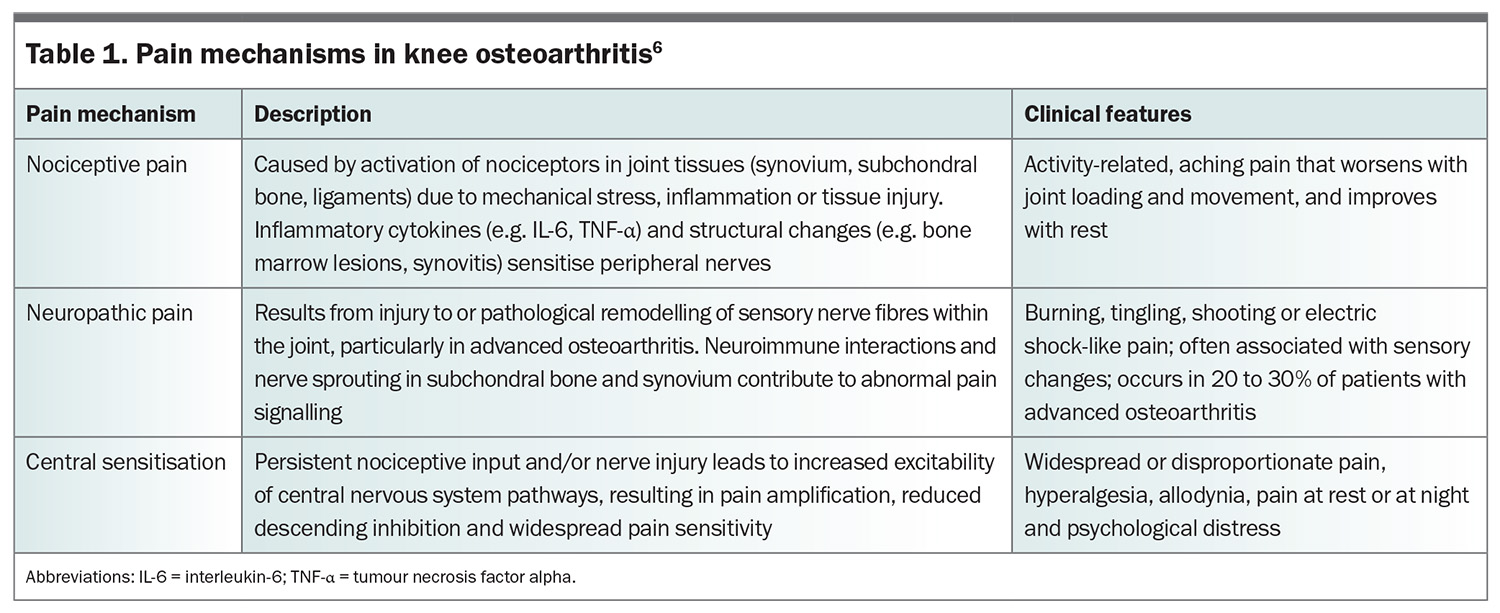
Knee osteoarthritis pain is primarily nociceptive, originating from joint loading, movement and inflammation of structures such as the synovium, subchondral bone and ligaments. This pain is typically mechanical, with heightened sensitivity due to peripheral sensitisation of nociceptors.
Although pain is initially nociceptive, about 20 to 30% of patients – especially those with advanced osteoarthritis or awaiting arthroplasty – develop a neuropathic pain component, with neuropathic and central sensitisation mechanisms emerging as the condition progresses.2-4
Neuropathic pain in osteoarthritis arises from structural nerve injury within the joint, often due to chronic inflammation and tissue remodelling, leading to symptoms such as burning, tingling or shooting pain. Persistent nociceptive input and nerve injury can also induce central sensitisation, characterised by widespread pain hypersensitivity, pain disproportionate to joint pathology and psychological distress.4 Recognising neuropathic and central sensitisation features is important, as affected patients often report more severe pain and disability and may benefit from tailored, multimodal pain management strategies.5-7 Table 1 summarises the different pain mechanisms involved in knee osteoarthritis and their relevant clinical features.6
Grading osteoarthritis
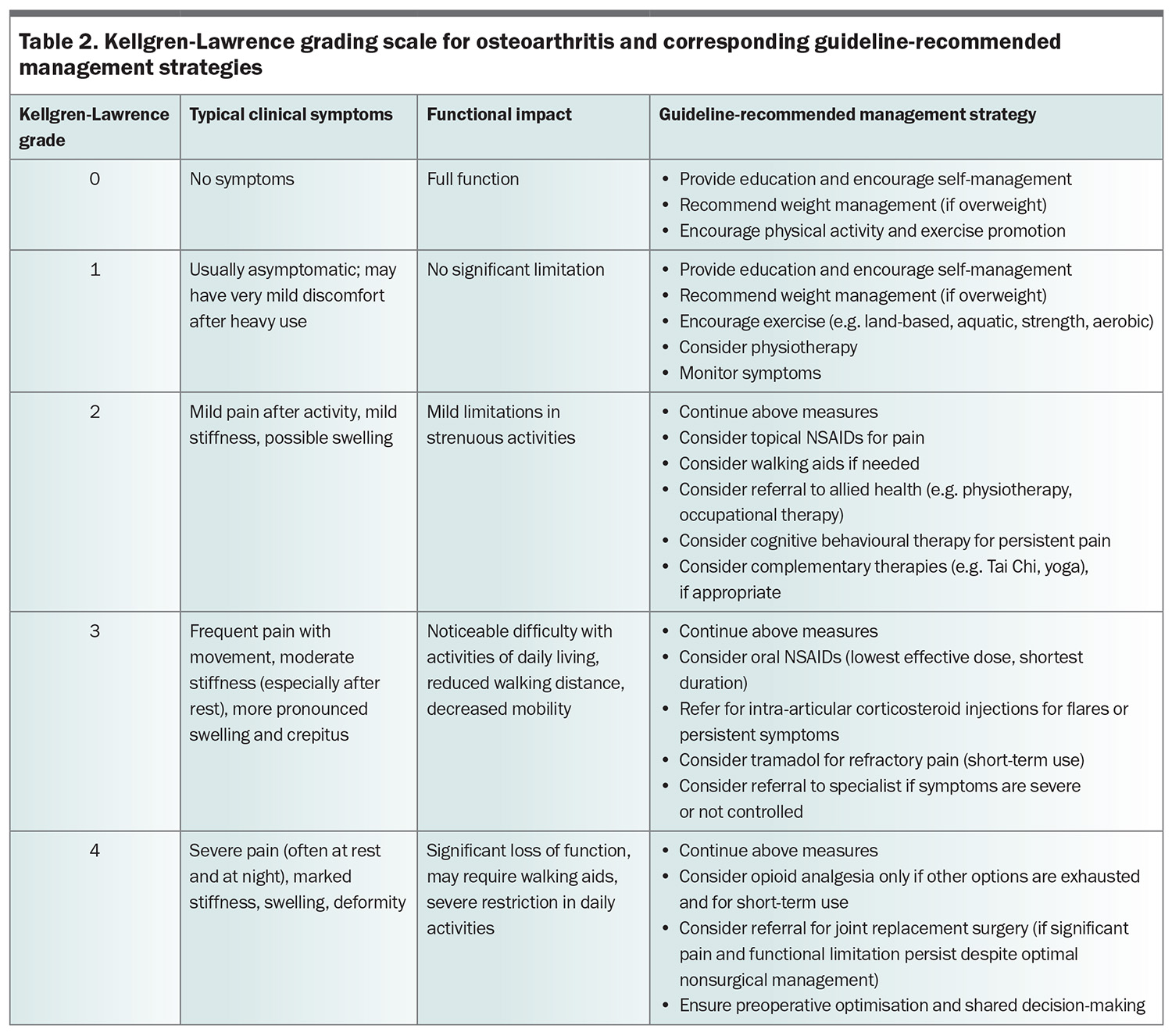
Knee osteoarthritis is radiographically graded using the Kellgren-Lawrence system, which ranges from grade 0 (no radiographic features) to grade 4 (severe joint space narrowing and deformity). Clinical symptoms often progress alongside radiographic changes but can show considerable individual variability.8
Managing chronic knee pain
The mainstay of chronic pain treatment can be divided into three pillars: nonpharmacological, pharmacological and interventional management, and this should be regularly revisited.
A summary of the different osteoarthritis grades and their recommended management strategies is shown in Table 2. Management requires a comprehensive, individualised approach tailored to the patient’s comorbidities, functional goals, motivation and psychological readiness for change.8,9 More specialised pain management is often sought in higher-grade knee osteoarthritis when pain and disability persist despite conservative treatment, or when pain is complex and difficult to manage by the GP alone.
Nonpharmacological management
GPs should prioritise nonpharmacological approaches as the foundation of knee osteoarthritis management, in line with national and international guidelines.8,10,11 Experts such as the Neuro Orthopaedic Institute research group have challenged traditional views of osteoarthritis as a simple ‘wear and tear’ disease, instead highlighting the complex interplay between joint health, the nervous system and patient beliefs.12
Lifestyle modification is recommended, with a focus on exercise and physiotherapy to strengthen the quadriceps and surrounding muscles of hips and knees. Weight loss is also encouraged, targeting a body mass index (BMI) of less than 30 kg/m2. Health coaching may assist with promoting activity modification, encouraging patients to switch to low-impact activities such as hydrotherapy and cycling, and incorporating daily stretching and myofascial release techniques (e.g. foam rolling) to improve joint mobility. Supportive footwear, such as shock-absorbing insoles and orthotics, may improve knee alignment and reduce strain.13
Psychological therapies such as cognitive behavioural therapy and mindfulness-based interventions also play a role. These therapies not only reduce pain and improve function but also address psychological factors that can exacerbate chronic pain.14,15 Some complementary therapies such as heat application, transcutaneous electrical nerve stimulation, acupuncture, massage and yoga serve as adjuncts to standard care.16-20
Pharmacological management
Pharmacological treatment follows a graded approach, starting with simple analgesics such as paracetamol and NSAIDs, and may include topical agents such as NSAIDs, local anaesthetic patches (lignocaine 5%) and capsaicin or menthol applications.8,10
The role of opioids in chronic knee pain
Current clinical guidelines and high-quality evidence discourage the use of opioids for chronic knee pain because of limited benefit and significant risks. The Strategies for Prescribing Analgesics Comparative Effectiveness randomised trial found that opioids were not superior to nonopioid medications in improving pain-related function or reducing pain intensity in patients with chronic back or knee osteoarthritis over 12 months.11
Systematic reviews confirm that opioids offer, at best, only modest short-term pain relief and do not meaningfully improve pain or function for most patients with osteoarthritis.1,11,21
The risk of long-term opioid use – such as dependence, coma, overdose and other adverse side effects – often outweighs potential benefits. Thus, opioids should be reserved in select cases where all other treatments have failed and should be used with ongoing monitoring.11,22
A recent Australian study found that about 16% of people with knee or hip osteoarthritis awaiting joint replacement surgery were using prescribed opioids regularly (daily) before surgery.23,24 Most patients discontinue opioids in the perioperative period after a total knee replacement (TKR), but a notable minority, especially those with prior opioid use, continue using them long term.
Tools such as the Faculty of Pain Medicine opioid calculator can assist in calculating oral Morphine Equivalent Daily Dose (oMEDD).25,26 This tool simplifies the conversion of different opioids and formulations into a standard reference, oMEDD. Its traffic light warning system helps clinicians assess the risk of dose-related harm and avoid excessive dosing and the associated complications. It also facilitates conversations with patients about opioid safety, reinforcing the importance of opioid stewardship and dose minimisation.
In Australia, 4 to 10% of patients with TKR continue opioid use beyond the early postoperative period, with higher rates among those with preoperative use.27 The ‘exceptional circumstances’ rule, as set by the TGA and reflected in national guidelines, limits opioid prescribing for chronic noncancer pain to less than three months.28,29 It is recommended to stay below 60 mg/day oMEDD, as the risk of harm and tolerance increases significantly with higher doses.29
Interventional management
Patients may receive interventional therapies, most commonly corticosteroids, platelet-rich plasma or hyaluronic acid injections into the knee joint, which can provide temporary relief.30 Unfortunately, the analgesic benefits may be short-lived.
Genicular nerve blocks (GNBs) have emerged as a promising management option for knee osteoarthritis, especially for patients who have not responded to conservative treatments or intra-articular injections, and for those who are ineligible for TKR.19
The role of genicular nerve procedures
What are geniculate nerves?
The genicular nerves are a group of sensory nerves that innervate the knee joint. There are three genicular nerves: the supralateral genicular nerve arises from the femoral nerve, the supramedial genicular nerve originates from the obturator nerve, and the inferomedial genicular nerve stems from the tibial division of the sciatic nerve.31,32 However, anatomical variation is common. These nerves can be blocked under image guidance (e.g. image intensifier or ultrasound), avoiding the need for intra-articular injection, which is less effective when there is extensive structural damage and joint space narrowing, as in grade 4 osteoarthritis.33
Genicular nerve blocks and geniculate nerve radiofrequency ablation
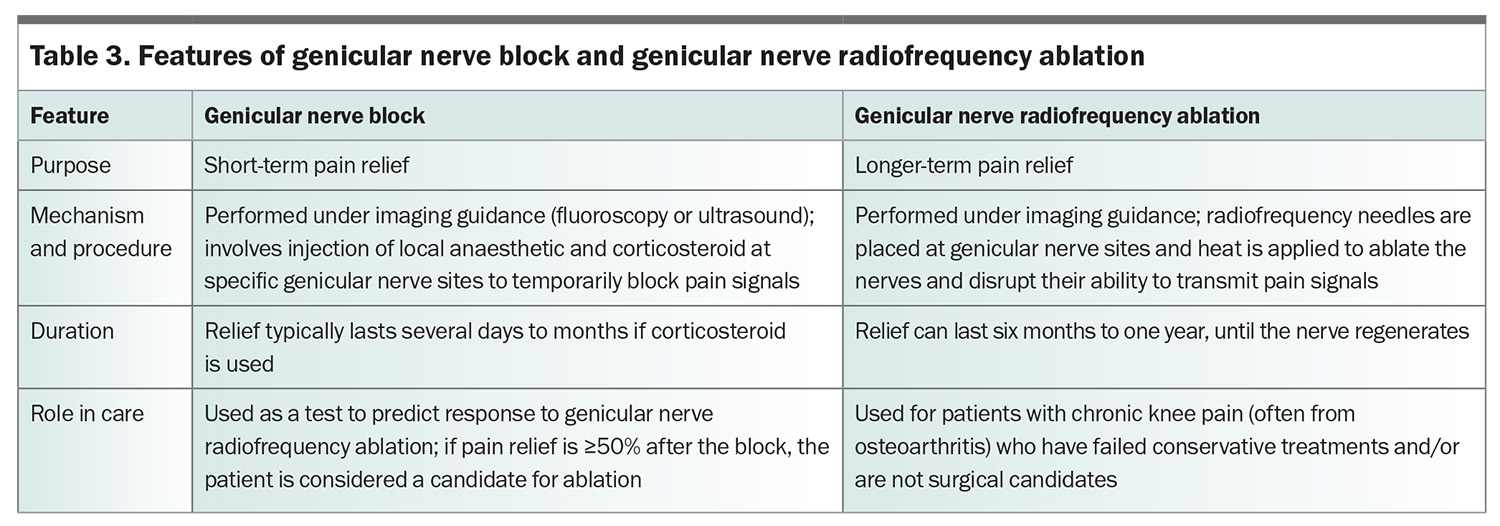
In GNB, local anaesthetic and corticosteroids are injected at the junction of the epiphysis and diaphysis of the femur and tibia. A positive block response, typically defined as pain relief of 50% or more within 24 hours, suggests the targeted nerves are a significant source of nociceptive input.34 A successful block depends on careful patient selection, as patients with central sensitisation are less likely to have a positive response to peripheral nerve blockade.32
GNB provides temporary pain relief, typically lasting several days to months, which can serve as a bridge to other treatments or facilitate rehabilitation. Genicular nerve radiofrequency ablation (GNRFA) provides longer-lasting pain relief, typically lasting six to 12 months, or longer.35,36 In GNRFA, radiofrequency needles are placed at the same sites as the block. Heat is applied to sensory nerves, thereby disrupting the transmission of nociceptive signals from the periphery to the central nervous system.
These procedures are ideal for patients with chronic knee osteoarthritis pain who have not found relief from conservative measures or short-term interventions, are not candidates for surgery or prefer to postpone surgery.35,37 GNB and GNRFA are both outlined in Table 3. Although there is currently no specific Medicare Benefits Schedule item number for GNB, item number 39323 x 3 can be used for GNRFA.
Genicular nerve radiofrequency ablation and opioid weaning
GNRFA is effective in reducing chronic knee pain and can provide significant and durable pain relief for patients with knee osteoarthritis.38 However, the evidence regarding its direct impact on opioid weaning, particularly in the perioperative period for TKR, remains mixed.
Several randomised controlled trials and prospective studies with fewer than 1000 patients indicate that preoperative GNRFA does not consistently reduce immediate postoperative opioid use or time to cessation after TKR compared with controls.39,40 These studies suggest that while GNRFA is effective for pain management, its influence on short-term opioid consumption following surgery is limited.
In contrast, a large national database study found that preoperative GNRFA was associated with a 50% reduction in the risk of prolonged postoperative opioid use compared with TKR alone (odds ratio 0.478; 95% confidence interval 0.409–0.559; p < 0.001).41 This suggests that, on a population level, GNRFA may help reduce the likelihood of extended opioid use after knee replacement surgery.
Overall, while GNRFA is a valuable tool for chronic pain control, its role in facilitating opioid weaning after TKR is not yet firmly established and may depend on patient selection and timing of the intervention.
Ultimately, successful opioid weaning requires not just pain control but also the addressing of psychological and behavioural factors, such as catastrophising, fear of movement, depression and self-efficacy.42 GPs and multidisciplinary teams play a central role in supporting safe opioid reduction and delivering holistic care for knee osteoarthritis patients.
An individualised management approach
The case studies presented in Box 1 and Box 2 illustrate the need for individualised care in knee osteoarthritis pain. Factors such as pain mechanism (nociceptive vs neuropathic pain vs central sensitisation), comorbidities, contraindications that affect treatment safety and effectiveness, and each patient’s functional and psychological goals need to be considered.
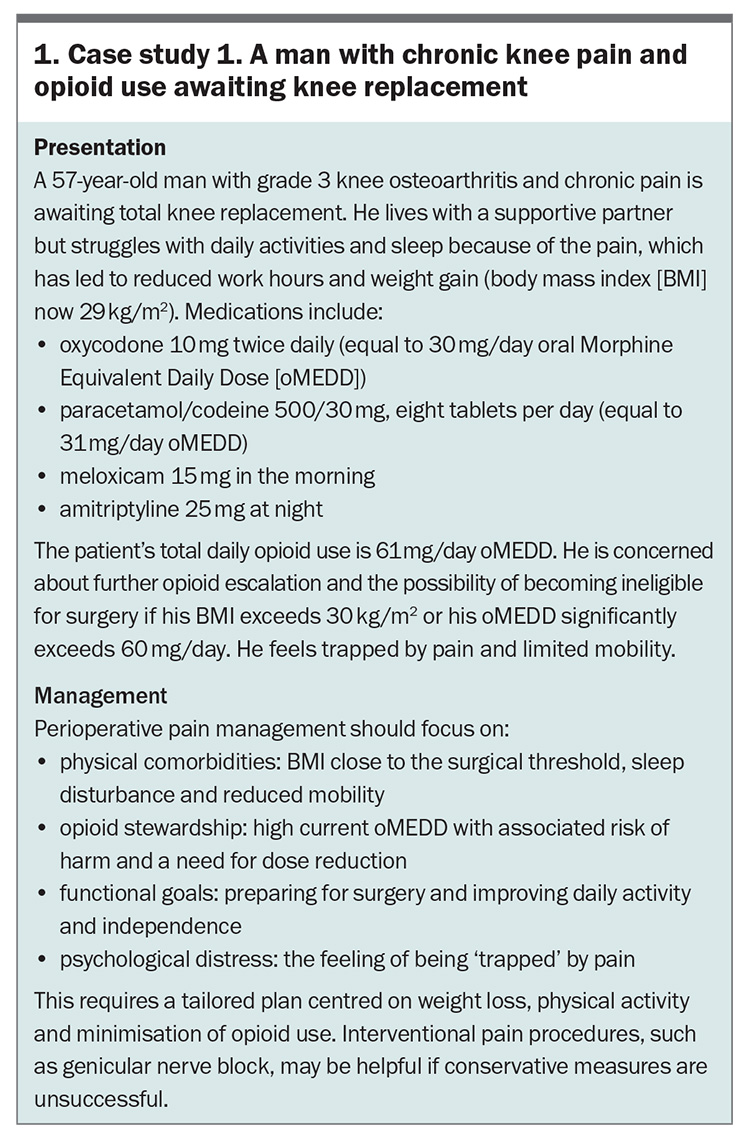
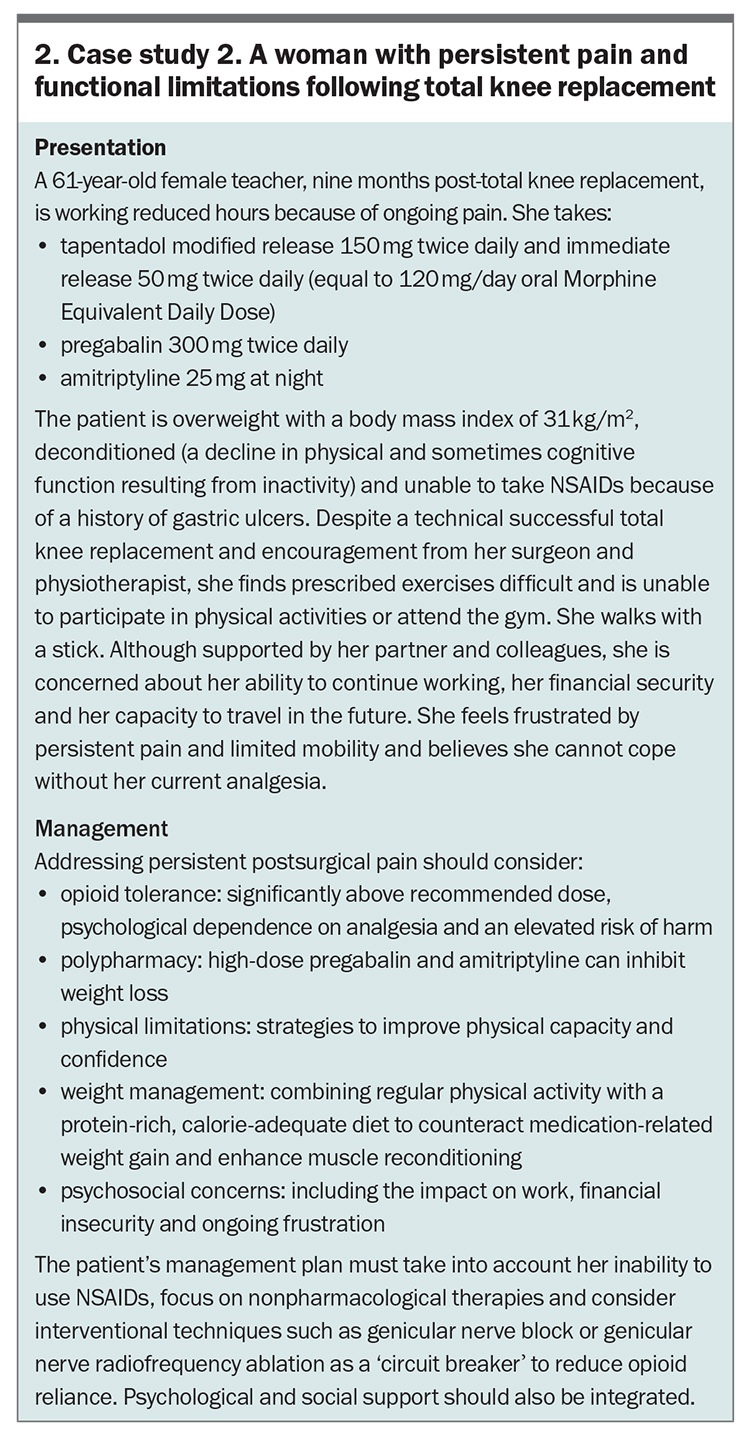
Procedures such as GNB and GNRFA can serve as ‘circuit breakers’, interrupting the chronic pain cycle, offering targeted pain relief, reducing medication dependence, improving overall function and supporting broader multimodal rehabilitation strategies within an individualised care plan.
Conclusion
Knee osteoarthritis affects over a million people in Australia and causes chronic pain that is often multifactorial, involving nociceptive, neuropathic and central sensitisation components. Individualised, multidisciplinary management is essential, with GPs playing a central role in guiding a multifaceted management approach.
Uncontrolled pain can lead to inappropriate escalation of opioids, which is no longer supported by current guidelines. GNB and GNRFA can avoid prolonged or escalating use of opioids in patients who have not responded to conservative treatments or who are not candidates for surgery. While these procedures may facilitate opioid reduction in some patients, optimal weaning requires a comprehensive approach that also addresses psychological factors and pain drivers. Tools such as the Faculty of Pain Medicine Opioid Conversion Calculator enhance clinical safety and shared decision-making. PMT
COMPETING INTERESTS: Dr Hollington has received consulting fees from The Queen Elizabeth Hospital and The International Spine Centre as a chronic pain specialist. She has received payment for her expert testimonies for ReturntoworkSA. She is on the Faculty of Pain Medicine Board, South Australian Regional Committee Board and has previously been on the board of the Pelvic Pain Foundation of Australia.
References
1. Australian Commission on Safety and Quality in Health Care. Osteoarthritis of the Knee Clinical Care Standard. Sydney: Australian Commission on Safety and Quality in Health Care; 2024.
2. French HP, Smart KM, Doyle F. Prevalence of neuropathic pain in knee or hip osteoarthritis: a systematic review and meta-analysis. Semin Arthritis Rheum 2017; 47: 1-8.
3. Helito CP, Moreira, FS, Santiago MAM, et al. Prevalence and interference of neuropathic pain in the quality of life in patients with knee osteoarthritis. Clinics (Sao Paulo) 2023; 78: 100287.
4. van Helvoort EM, Welsing PMJ, Jansen MP, et al. Neuropathic pain in the IMI-APPROACH knee osteoarthritis cohort: prevalence and phenotyping. RMD Open 2021; 7: e002025.
5. Soni A, Batra RN, Gwilym SE, et al. Neuropathic features of joint pain: a community-based study. Arthritis Rheum 2013; 65: 1942-1949.
6. Eitner A, Hofmann GO, Schaible HG. Mechanisms of osteoarthritic pain. Studies in humans and experimental models. Front Mol Neurosci 2017; 10: 349.
7. Bannuru RR, Osani MC, Vaysbrot EE, et al. OARSI guidelines for the non-surgical management of knee, hip, and polyarticular osteoarthritis. Osteoarthritis Cartilage 2019; 27: 1578-1589.
8. Royal Australian College of General Practitioners (RACGP). Guideline for the Management of Knee and Hip Osteoarthritis. Melbourne: RACGP; 2018.
9. Musila N, Underwood M, McCaskie AW, Black N, Clarke A, van der Meulen JH. Referral recommendations for osteoarthritis of the knee incorporating patients’ preferences. Fam Pract 2011; 28: 68-74.
10. Kolasinski SL, Neogi T, Hochberg MC, et al. 2019 American College of Rheumatology/Arthritis Foundation guideline for the management of osteoarthritis of the hand, hip, and knee. Arthritis Care Res 2020; 72: 149-162.
11. Krebs EE, Gravely A, Nugent S, et al. Effect of opioid vs nonopioid medications on pain-related function in patients with chronic back pain or hip or knee osteoarthritis pain: the SPACE randomized clinical trial. JAMA 2018; 319: 872-882.
12. Moseley GL, Butler DS, Stanton TR. The Knee Osteoarthritis Handbook. 1st ed. Adelaide: Noigroup Publications; 2023.
13. Luo C, Wang J, Guo J. Complementary, alternative, and integrative medicine therapies for knee osteoarthritis: a visual analytics analysis of the research domain. Front Med (Lausanne) 2025; 12: 1586357.
14. Isaji Y, Kurasawa Y, Sasaki D, Hayashi M, Kitagawa T. Psychological intervention for knee osteoarthritis: a systematic review and meta-analysis. Psychol Health Med 2025; 30: 636-662.
15. Marais C, Song Y, Ferreira R, et al. Evaluation of mindfulness based stress reduction in symptomatic knee or hip osteoarthritis patients: a pilot randomized controlled trial. BMC Rheumatol 2022; 6: 46.
16. Brosseau L, Yonge KA, Robinson V, et al. Thermotherapy for treatment of osteoarthritis. Cochrane Database Syst Rev 2003; 2003: CD004522.
17. Zeng C, Li H, Yang T, et al. Electrical stimulation for pain relief in knee osteoarthritis: systematic review and network meta-analysis. Osteoarthritis Cartilage 2015; 23: 189-202.
18. Chen J, Liu A, Zhou Q, et al. Acupuncture for the treatment of knee osteoarthritis: an overview of systematic reviews. Int J Gen Med 2021; 14: 8481-8494.
19. Perlman AI, Sabina A, Williams A, Njike VY, Katz DL. Massage therapy for osteoarthritis of the knee: a randomized controlled trial. Arch Intern Med 2006; 166: 2533-2538.
20. Lu J, Kang J, Huang H, et al. The impact of yoga on patients with knee osteoarthritis: a systematic review and meta-analysis of randomized controlled trials. PLoS One 2024; 19: e0303641.
21. Abdel Shaheed C, Awal W, Zhang G, et al. Efficacy, safety, and dose-dependence of the analgesic effects of opioid therapy for people with osteoarthritis: systematic review and meta-analysis. Med J Aust 2022; 216: 305-311.
22. da Costa BR, Pereira TV, Saadat P, et al. Effectiveness and safety of non-steroidal anti-inflammatory drugs and opioid treatment for knee and hip osteoarthritis: network meta-analysis. BMJ 2021; 375: n2321.
23. Genel F, Harris IA, Pavlovic N, et al. Does preoperative opioid use predict outcomes to 6 months following primary unilateral knee or hip arthroplasty for osteoarthritis? A data-linked retrospective study. Arthroplasty 2024; 6: 11.
24. Wall C, de Steiger R. Pre-operative optimisation for hip and knee arthroplasty: minimise risk and maximise recovery. Aust J Gen Pract 2020; 49: 710-714.
25. Faculty of Pain Medicine. Opioid Dose Equivalence Calculation Table (PS01(PM) (Appendix). Melbourne: Australian and New Zealand College of Anaesthetists; 2021.
26. Faculty of Pain Medicine. FPM Opioid Calculator. Melbourne: Australian and New Zealand College of Anaesthetists. Available online at: https://www.anzca.edu.au/safety-and-advocacy/opioid-calculator (accessed July 2025).
27. Australian Commission on Safety and Quality in Health Care. Opioid Medicines Dispensing, All Ages, From 2016–17 to 2020–21. Sydney: Australian Commission on Safety and Quality in Health Care; 2022.
28. Faculty of Pain Medicine. Statement Regarding the Use of Opioid Analgesics in Patients With Chronic Non-Cancer Pain (PS01(PM)). Melbourne: Australian and New Zealand College of Anaesthetists; 2021.
29. Pain Management Network. Quick Steps Through Opioid Management. Sydney: The Agency for Clinical Innovation. Available online at: https://aci.health.nsw.gov.au/chronic-pain/health-professionals/quick_steps_through_opioid_management (accessed July 2025).
30. Malik KN, Camp N, Chan J, Ballard M. Interventional techniques for the management of knee osteoarthritis: a literature review. Cureus 2023; 15: e47133.
31. Kim JH, Shustorovich A, Arel AT, Downie SA, Cohen SP, Kim SY. Genicular nerve anatomy and its implication for new procedural approaches for knee joint denervation: a cadaveric study. Pain Medicine 2022; 23: 144-151.
32. New York School of Regional Anesthesia (NYSORA). Genicular Nerve Blocks. New York: NYSORA. Available online at: https://www.nysora.com/techniques/lower-extremity/nysora-com-genicular-nerve-blocks/ (accessed July 2025).
33. Ayhan E, Kesmezacar H, Akgun I. Intraarticular injections (corticosteroid, hyaluronic acid, platelet rich plasma) for the knee osteoarthritis. World J Orthop 2014; 5: 351-361.
34. Shanahan EM, Robinson L, Lyne S, et al. Genicular nerve block for pain management in patients with knee osteoarthritis: a randomized placebo-controlled trial. Arthritis Rheumatol 2023; 75: 201-209.
35. Hasoon J, Orhurhu VJ, Yazdi C. Genicular nerve blocks for the management of chronic knee pain related to osteoarthritis - a case series. Orthop Rev (Pavia) 2024; 16: 126046.
36. Stake S, Agarwal AR, Coombs S, et al. Total knee arthroplasty after genicular nerve radiofrequency ablation: reduction in prolonged opioid use without increased postsurgical complications. J Am Acad Orthop Surg Glob Res Rev 2022; 6: e22.00125.
37. Walega D, McCormick Z, Manning D, Avram M. Radiofrequency ablation of genicular nerves prior to total knee replacement has no effect on postoperative pain outcomes: a prospective randomized sham-controlled trial with 6-month follow-up. Reg Anesth Pain Med 2019. Epub ahead of print. doi:10.1136/rapm-2018-100094.
38. Choi WJ, Hwang SJ, Song JG, et al. Radiofrequency treatment relieves chronic knee osteoarthritis pain: a double-blind randomized controlled trial. Pain 2011; 152: 481-487.
39. McCormick ZL, Reddy R, Korn M, et al. A prospective randomized trial of prognostic genicular nerve blocks to determine the predictive value for the outcome of cooled radiofrequency ablation for chronic knee pain due to osteoarthritis. Pain Med 2018; 19: 1628-1638.
39. Lyman S, Lee YY, Franklin PD, Li W, Mayman DJ, Padgett DE. Preoperative genicular nerve radiofrequency ablation and postoperative opioid use in total knee arthroplasty: a randomized controlled trial. J Arthroplasty 2023; 38: 301-308.
40. Liew SH, Lee JY, Tran P. The impact of preoperative genicular nerve radiofrequency ablation on opioid consumption after total knee replacement: a prospective study. Knee Surg Sports Traumatol Arthrosc 2024; 32: 112-120.
41. Huang AT, Chen CY, Lin CH, Wang YH, Lin CL. Preoperative genicular nerve radiofrequency ablation reduces risk of prolonged opioid use after total knee arthroplasty: a nationwide cohort study. Anesth Analg 2022; 134: 775-783.
42. Avery N, McNeilage AG, Stanaway F, et al. Efficacy of interventions to reduce long term opioid treatment for chronic non-cancer pain: systematic review and meta-analysis. BMJ 2022; 377: e066375.
Single article purchases are temporarily unavailable due to site maintenance.
If you would like to purchase an article during this time, please email us at [email protected] with the article details and we'll assist you directly. We'll also let you know when online purchasing is available again.
Thank you for your patience and understanding.