
Managing chronic spinal pain – when to refer and what to expect
Chronic spinal pain is a leading cause of disability and reduced quality of life. Careful triage, patient education and function-focused management can help identify serious pathology, support recovery and avoid low-value interventions.
- Chronic spinal pain should be assessed according to the duration, presentation and likely pain mechanism, including nociceptive, neuropathic and nociplastic contributors.
- Red flags and neurological compromise must be actively screened for, particularly when symptoms change, fail to follow the expected course or suggest malignancy, infection, fracture or cauda equina syndrome.
- Routine imaging is not indicated for uncomplicated spinal pain and should be reserved for cases in which findings are likely to change management.
- Primary care management should focus on education, reassurance, functional restoration, active self-management and risk-stratified multidisciplinary care.
- Pure mu-opioids have a very limited role in chronic spinal pain and should be avoided except in exceptional circumstances, with careful monitoring and clear functional goals.
Chronic spinal pain is a significant global health issue, contributing substantially to disability and reduced quality of life. Low back pain, a common form of spinal pain, has been identified as the single leading cause of years lived with disability.1 In Australia, the direct healthcare costs and indirect economic impact of lost productivity because of chronic pain are estimated at more than $100 billion annually.2
Optimal management of chronic spinal pain includes accurate diagnosis and high-value interdisciplinary care. This article provides a clinical framework for primary care providers and allied health professionals to manage chronic spinal pain using high-value care paradigms, optimising diagnostic triage and evidence-based, patient-centred approaches to functional restoration, medication management, interventional therapies and pain self-management.
What is acute and what is chronic pain?
Acute spinal pain, often categorised as occurring for less than three months, is typically associated with a nociceptive response to tissue or nerve injury. Chronic spinal pain persists beyond three months and is classified under the International Classification of Diseases, 11th Revision (ICD-11) as either chronic primary pain (a disease in its own right) or chronic secondary pain (a symptom of an underlying condition).3
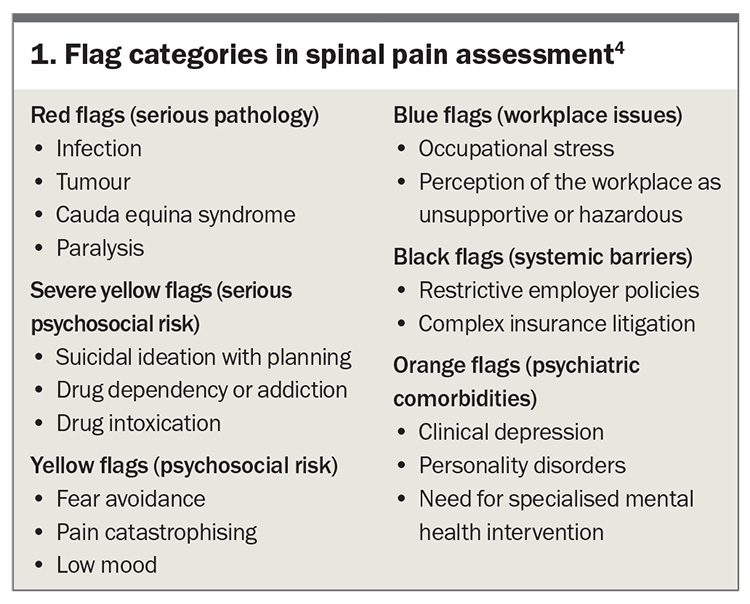
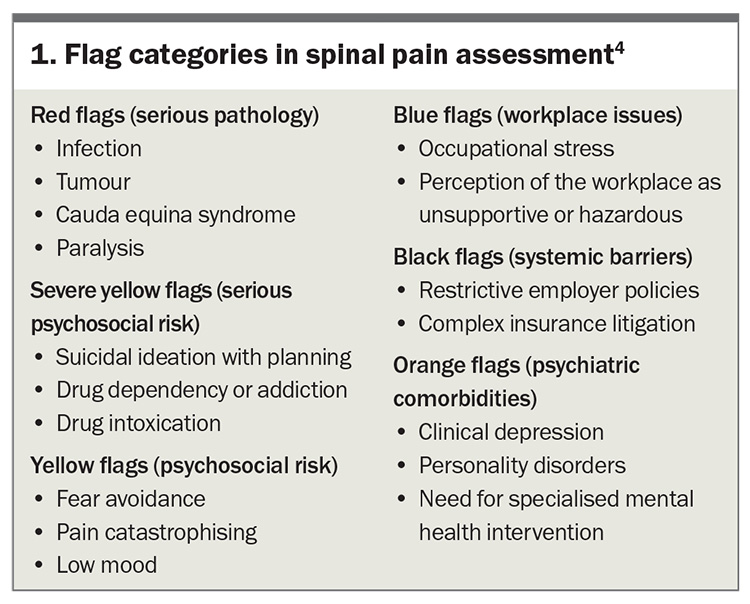
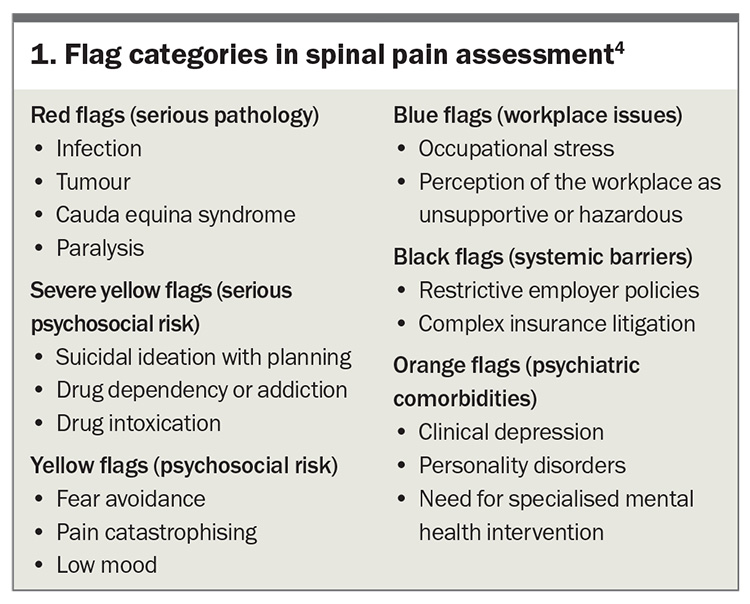
Patients with chronic spinal pain may present with various clinical and psychosocial flags that indicate serious underlying pathology or risk of chronic pain and disability (Box 1).4
Chronic primary pain
Chronic primary pain is defined as pain persisting for more than three months, associated with significant emotional distress or functional disability, and not better accounted for by another diagnosis.3 Patients often present with widespread pain that is disproportionate to any identifiable tissue damage. This pain is typically described as diffuse, aching or burning and may be accompanied by symptoms such as fatigue, sleep disturbance and cognitive difficulties. Common conditions include fibromyalgia, which falls into a chronic widespread pain phenotype, although it may have spinal manifestations. These patients often exhibit signs of central sensitisation, such as allodynia and hyperalgesia. Psychological factors, including anxiety, depression and catastrophising, are common and contribute to the overall pain experience.3
Chronic secondary pain
Chronic secondary pain occurs in the context of a specific underlying condition – such as a tumour, infection, nerve injury or structural deformity – which causes a nociceptive process to occur.3 Common examples include chronic spinal pain following surgery or trauma, cancer-related pain and pain due to degenerative conditions such as osteoarthritis or intervertebral disc herniation, including those associated with painful radicular symptoms. Patients often report localised pain that correlates with the site of tissue damage or inflammation. For instance, radicular pain arising from a herniated disc may present as sharp, shooting, electrical or burning pain radiating down the leg, whereas pain associated with spinal stenosis may worsen with activity and improve with rest (known as neurogenic claudication). Diagnostic imaging and clinical examination often reveal structural abnormalities that correlate with the patient’s symptoms.3
What are the causes of chronic spinal pain?
The causes of chronic spinal pain can be broadly classified into nociceptive, neuropathic and nociplastic categories, with emergent red-flag pathologies. These frequently overlap.4
Nociceptive pain
Nociceptive pain arises from activation of peripheral sensory receptors in response to actual or threatened tissue injury. Common generators in the spine include intervertebral discs, facet joints and sacroiliac joints. Discogenic pain is estimated to account for about 26 to 42% of chronic low back pain cases, whereas facet joint arthropathy is implicated in 15 to 45% of cases.5,6 Paraspinal musculature, particularly multifidus dysfunction and fatty infiltration, contributes to segmental instability, and ongoing mechanical strain may present in more chronic spinal pain phenotypes. Myofascial trigger points and muscle imbalance further create local proinflammatory drivers of pain, with cytokine-mediated nociceptive sensitisation producing pain that is typically localised.7
Neuropathic pain
Neuropathic pain results from a lesion or disease of the somatosensory nervous system. Radiculopathy is the most common neuropathic presentation of spinal pain in primary care, and is most often due to disc herniation or foraminal stenosis causing nerve root compression or chemical irritation from annular tears in discs. Neuropathic pain is often described as burning, tingling or shooting and may be associated with sensory deficits or motor weakness.8 Assessment for features of neurogenic claudication is important.
Nociplastic pain
Central sensitisation and nociplastic pain mechanisms underlie a significant portion of chronic back and spinal pain presentations. Nociplastic pain is defined in the ICD-11 under chronic widespread pain. It is characterised by dorsal horn wind-up, glial activation and impaired descending inhibition, resulting in pain that is disproportionate to peripheral pathology and strongly influenced by psychosocial factors.9 Patients with nociplastic pain may exhibit widespread pain, hyperalgesia and allodynia.10
Urgent causes
Urgent causes include malignancy, vertebral fracture, spinal infection and inflammatory spondyloarthropathies. Red-flag clinical signs and symptoms include unrelenting night pain, pain at rest, systemic symptoms or unexplained weight loss, and require urgent investigation and referral to a pain physician and a relevant medical or surgical specialist.
What history, examinations and investigations are appropriate for primary care?
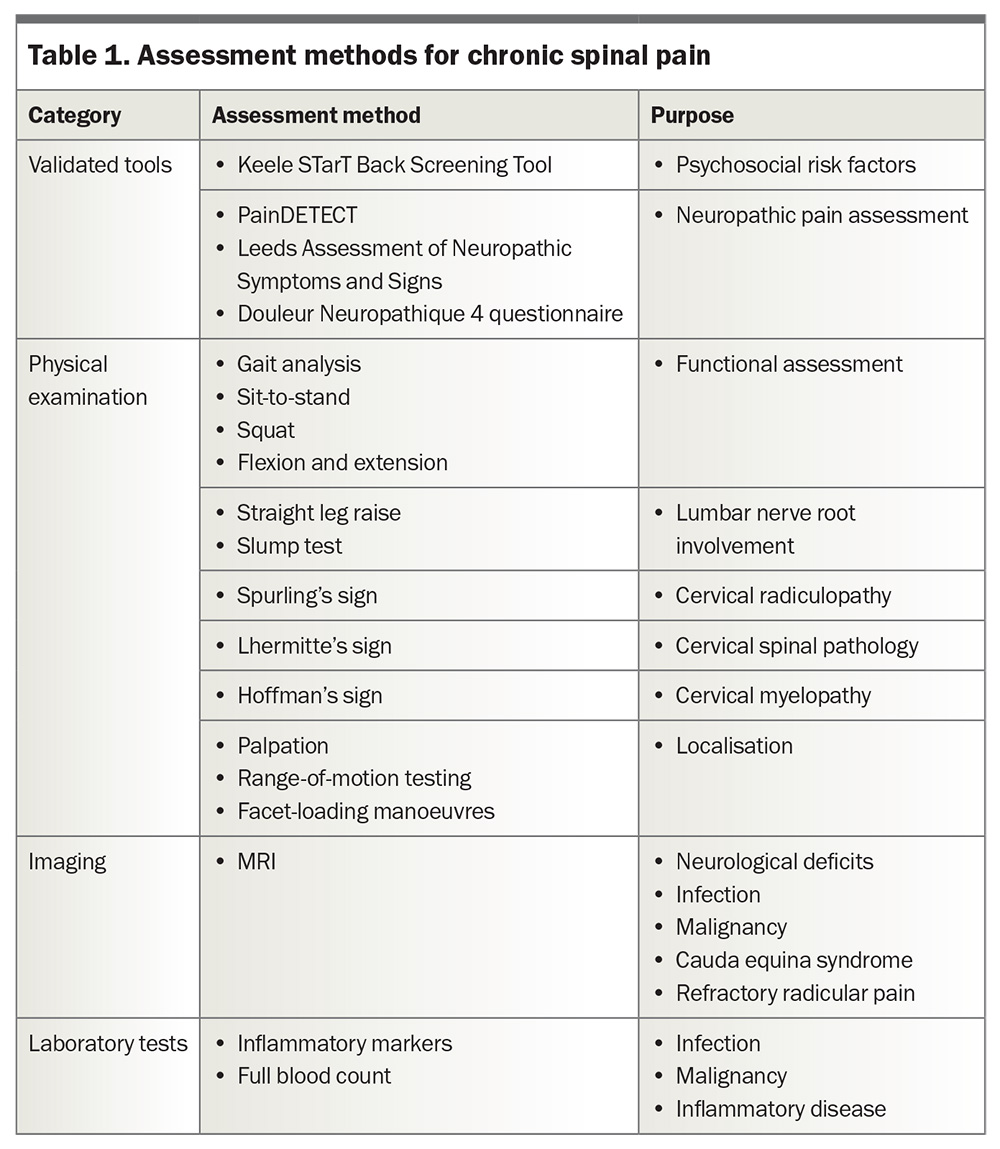
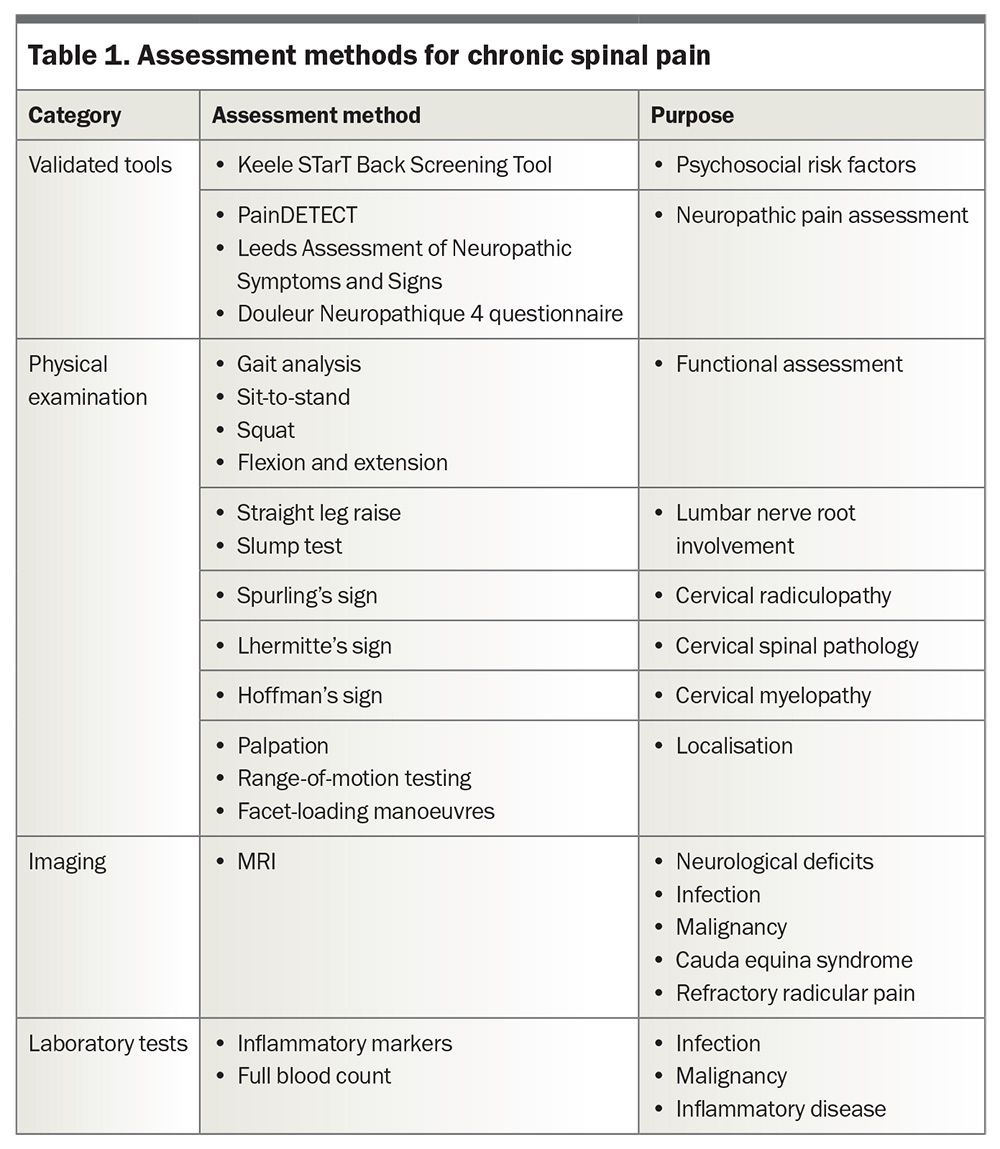
Assessment of chronic spinal pain should focus on clinical triage based on the timeline and specific presentation. The primary objectives are to exclude serious pathology, identify radicular or inflammatory syndromes and characterise the potential mechanisms as nociceptive, neuropathic or nociplastic. Validated tools, examinations and investigations are summarised in Table 1.
History
The timeline of pain presentation should be explored, alongside the specific patient presentation and profile, including pain behaviour, to discriminate mechanical, neuropathic, inflammatory and systemic causes. Key elements include onset, pain distribution, aggravating and relieving factors, nocturnal pain, morning stiffness and functional impact. Systematic screening for red flags is essential. Psychosocial risk factors (Box) should be routinely explored, as they predict chronicity and disability, and can be efficiently stratified using validated tools.8
Physical examination
Physical assessment should focus on functional assessment (including gait analysis, sit-to-stand, squat, flexion and extension), detailed neurological screening and exclusion of central or nonspinal pathology (Table 1).11,12 A brief but systematic neurological examination to assess strength, reflexes, sensation, co-ordination and tone can help identify radiculopathy or myelopathy. Provocative manoeuvres can improve diagnostic yield for lumbar nerve root involvement and help identify cervical radiculopathy and central spinal pathology. Palpation, range-of-motion testing and facet-loading manoeuvres may assist localisation but have limited specificity. The absence of focal tenderness should not be used to dismiss pain and should prompt consideration of nociplastic mechanisms, where altered central processing predominates.
Investigations
Typically, imaging is reserved for cases in which the results are likely to change management. Routine imaging is not indicated in the first six weeks of uncomplicated spinal pain without red-flag symptoms. Urgent MRI is indicated for progressive neurological deficits, suspected infection or malignancy, cauda equina syndrome or persistent radicular pain refractory to conservative therapy.
Various sources, including the Royal Australian College of General Practitioners, recommend imaging only when red flags are present or if the pain fails to improve with conservative management.13,14 Over-reliance on imaging can lead to unnecessary interventions and increased patient anxiety.13,15,16
Laboratory testing may include inflammatory markers and full blood count when infection, malignancy or inflammatory disease is suspected. Degenerative findings are estimated to occur in more than 80% of asymptomatic individuals, supporting careful communication of imaging results within the clinical context.17
What generic primary care treatments are available?
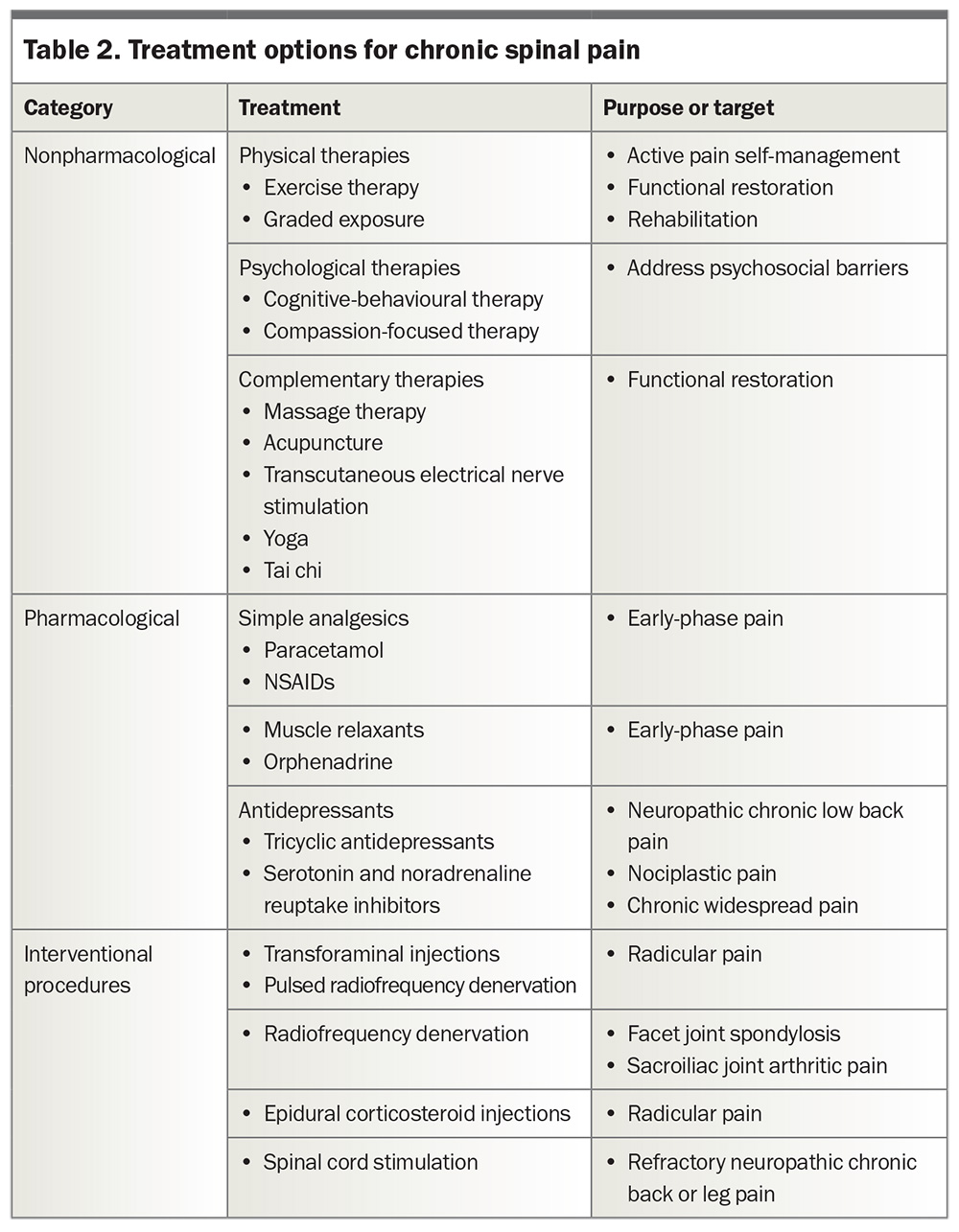
Primary care management should focus on active, functional improvement and should be risk stratified according to the likely pain mechanism, clinical presentation and presence of red-flag features. In the absence of clear pathology, the cornerstone of first-line care is comprehensive education and reassurance, coupled with a shared self-management plan.4 Treatment options are summarised in Table 2.
Nonpharmacological treatments
Nonpharmacological treatments for chronic spinal pain include exercise, cognitive-behavioural therapy and multidisciplinary rehabilitation. Exercise programs should be tailored to the patient’s capabilities and preferences, emphasising graded exposure and pacing. Psychological therapies using a cognitive-behavioural therapy approach are recommended when psychosocial barriers are prominent.18 Complementary therapies including massage, acupuncture, transcutaneous electrical nerve stimulation, yoga and functional movement programs such as tai chi are also recommended for their potential benefits in chronic low back pain.18 Engaging patients in active pain self-management is the mainstay of chronic pain care.
Pharmacological treatments
NSAIDs may be considered in the early phase of chronic spinal pain, although there is little strong evidence to support their use in longer-term chronic pain management; paracetamol has limited evidence and is not recommended as monotherapy for low back pain. National Institute for Health and Care Excellence guidance advises against paracetamol monotherapy for low back pain and recommends weak opioids only for acute presentations when NSAIDs are contraindicated, not tolerated or ineffective.19-21
Pure mu-opioids should be avoided altogether or used with strict cessation and safety procedures. The Faculty of Pain Medicine and the TGA recommend against pure mu-opioid use in chronic noncancer pain except in exceptional circumstances, as outlined further below.19,20
Muscle relaxants, such as orphenadrine, may be considered for short-term use in acute low back pain, but their long-term efficacy is limited.22 Benzodiazepines should generally be avoided in both acute and chronic presentations.
Antidepressants, particularly tricyclic antidepressants and serotonin and noradrenaline reuptake inhibitors, may be beneficial for chronic low back pain with a neuropathic component, as well as in nociplastic or chronic widespread pain presentations. There is evidence of a role for serotonin and noradrenaline reuptake inhibitors (such as duloxetine) in chronic low back pain.23
Interventional procedures
Although there are specific instances in which interventional therapies may be indicated in the treatment of chronic spinal pain, their role requires careful patient selection. In the presence of acute radicular pain symptoms, interventional pain therapies, including transforaminal injections and, in selected chronic cases, pulsed radiofrequency therapy, may provide temporary relief.21 In chronic facet joint spondylosis and sacroiliac joint arthritic pain, radiofrequency denervation may be appropriate for chronic low back pain after a positive diagnostic block.21 Epidural corticosteroid injections may provide short-term relief for radicular pain.24 In refractory cases of chronic neuropathic back pain, leg pain or both, patients may be referred to a centre of excellence for consideration of spinal cord stimulation.25,26
What does specialist management consist of?
Specialist management by a pain physician provides stepped escalation to improve diagnostic certainty, identify barriers to recovery and deliver co-ordinated interdisciplinary pain care. The specialist’s role is to reduce low-value care (including unnecessary imaging and procedures, as well as high-risk prescribing), and to refine a plan that prioritises functional restoration, self-efficacy and a safe return to activity. This includes structured risk stratification (including red flags, neurological risk, medication- or substance-use risk and psychosocial drivers of disability), targeted review of existing investigations with clinical correlation, clear safety-netting and planned follow up.
Specialist input also supports medication optimisation and deprescribing where appropriate, selection of suitable interventional therapies and integration of rehabilitation. Where relevant, the specialist co-ordinates care across primary care, physiotherapy or exercise physiology, psychology, surgical and medical services, and occupational roles.
What is the specific role of pure mu-opioids?
Pure mu-opioids play a very limited role in spinal pain and are not recommended as routine therapy. Current clinical evidence does not support their efficacy and shows a significant risk of harm in the management of chronic pain, including spinal pain.27,28 Faculty of Pain Medicine and TGA standards outline that pure mu-opioids are not indicated as modified-release opioids for chronic spinal pain, except in exceptional circumstances, and opioids in general should be used only in exceptional circumstances for the management of chronic noncancer pain.19,20
If initiated, pure mu-opioids must be time limited and goal directed, prioritising functional restoration rather than pain relief alone. Clinicians should be aware of and monitor the oral morphine-equivalent daily dose, and remain aware of the risks of harm, including opioid-induced hyperalgesia, endocrine dysfunction and drug dependence. The literature has outlined that patients consuming an oral morphine-equivalent daily dose of 20 to 50 mg/day are at significantly increased risk of overdose, and those consuming more than 90 mg/day are at significantly increased mortality risk.29,30
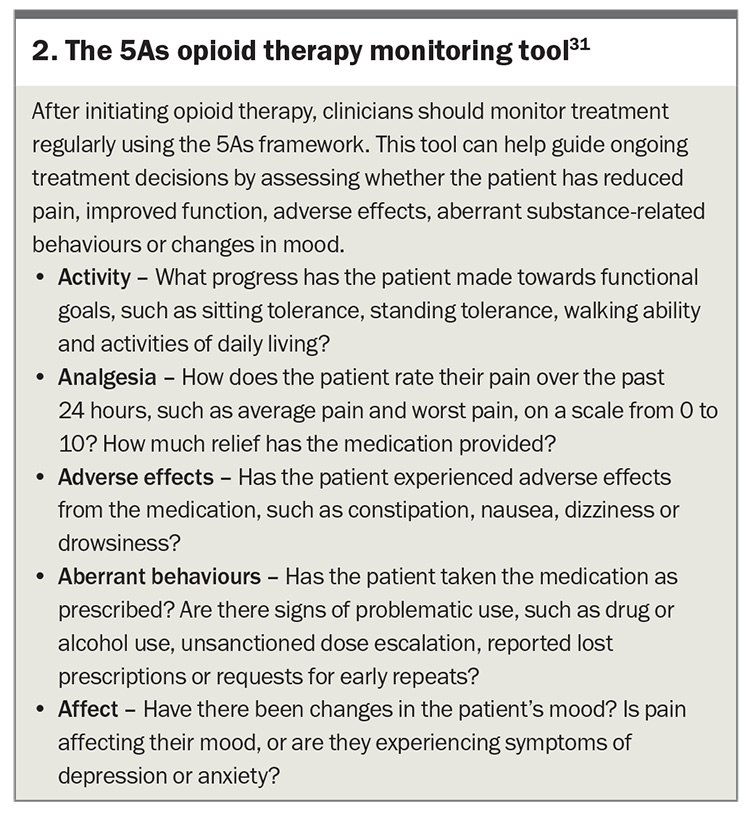
A simple framework outlined by the 5As – analgesia, activity, affect, adverse events and aberrant behaviour – should be used in follow-up visits for patients with long-term opioid prescriptions (Box 2).31 Screening tools such as the Opioid Risk Tool and the Screener and Opioid Assessment for Patients with Pain may also be used.32,33
Atypical opioids, such as tramadol, tapentadol and buprenorphine, are thought to have a lower serious adverse event rate than pure mu-opioids and may have a role in treatment if individual efficacy has been demonstrated.
What must not be missed?
Red flags
In chronic spinal pain, the priority is patient safety: ensuring that serious pathology and neurological compromise are not overlooked. Red flags (Box 1) should be actively reassessed if symptoms change, symptoms fail to follow an expected course or the patient identifies concerns.4,12 These include features suggestive of malignancy or infection (e.g. unexplained weight loss, fever or night sweats, immunosuppression, intravenous drug use or prior malignancy), fracture risk (e.g. trauma, prolonged corticosteroid exposure and known or suspected osteopenia or osteoporosis) and neurological emergency (e.g. new or progressive motor deficit, gait disturbance, widespread sensory change, saddle anaesthesia or bowel or bladder dysfunction). Night pain should raise concern when accompanied by systemic symptoms, escalating severity or a change in neurological status.12 Where concern exists, timely escalation to an emergency department, specialist consultation or targeted investigations is required. If imaging has been performed, it should be reviewed directly and interpreted in clinical context – with explicit attention to findings such as fracture, malignancy, infection or severe spinal canal compromise – rather than incidental degenerative change.12
Vertebral compression fracture
A diagnosis of vertebral compression fracture should prompt systematic appraisal of stability and potential risk of retropulsion into the spinal canal.15 This warrants review for posterior wall involvement, retropulsion or collapse into the spinal canal, multilevel fractures and any symptoms of spinal cord compression or cauda equina syndrome. Clinical assessment should actively screen for a neuropathic component, such as radicular pain, dermatomal sensory disturbance or focal weakness, which may be unresponsive to initial therapy. Vertebral compression fracture also warrants bone health assessment (including osteopenia or osteoporosis risk and secondary contributors, where appropriate), falls-risk evaluation and early implementation of prevention strategies to reduce recurrent fracture risk.15 The neurological examination should be performed and documented consistently, with the above criteria for repeat imaging and functional goals that define adequate response to treatment.
Conclusion
Although the lack of an exact aetiological diagnosis and the often-persistent nature of the condition have frustrated patients, carers and the medical profession, robust and validated approaches are now available to treat chronic spinal pain. The goal for low back pain is to correctly inform patients of what it is and what it is not, and to ensure standardised care with adherence to guidelines that promote both effective care and sensible healthcare utilisation. PMT
COMPETING INTERESTS: Dr McParland: None. Conjoint Associate Professor Russo is a Consultant for Boston Scientific, Mainstay Medical, Medtronic, Nevro, Presidio Medical and Saluda Medical; performs sponsored research activities for Biotronik, Boston Scientific, Mainstay Medical, Medtronic, Nevro, Presidio Medical and Saluda Medical; is the Immediate Past-President of the International Neuromodulation Society; is the Director-At-Large of the Neuromodulation Society of Australia and New Zealand; and has minor equity holdings in SPR Therapeutics.
References
1. GBD 2021 Low Back Pain Collaborators. Global, regional, and national burden of low back pain, 1990-2020, its attributable risk factors, and projections to 2050: a systematic analysis of the Global Burden of Disease Study 2021. Lancet Rheumatol 2023; 5: e316-e329.
2. Deloitte Access Economics. The cost of pain in Australia. Canberra: Painaustralia; 2019. Available online at: https://www.deloitte.com/au/en/services/economics/analysis/cost-pain-australia.html (accessed June 2026).
3. Perrot S, Cohen M, Barke A, Korwisi B, Rief W, Treede RD, et al. The IASP classification of chronic pain for ICD-11: chronic secondary musculoskeletal pain. Pain 2019; 160: 77-82.
4. Knezevic NN, Candido KD, Vlaeyen JWS, Van Zundert J, Cohen SP. Low back pain. Lancet 2021; 398: 78-92.
5. Verrills P, Nowesenitz G, Barnard A. Prevalence and characteristics of discogenic pain in tertiary practice: 223 consecutive cases utilizing lumbar discography. Pain Med 2015; 16: 1490-1499.
6. Perolat R, Kastler A, Nicot B, et al. Facet joint syndrome: from diagnosis to interventional management. Insights Imaging 2018; 9: 773-789.
7. Lam C, Francio VT, Gustafson K, Carroll M, York A, Chadwick AL. Myofascial pain - a major player in musculoskeletal pain. Best Pract Res Clin Rheumatol 2024; 38: 101944.
8. Attal N, Bouhassira D, Baron R. Diagnosis and assessment of neuropathic pain through questionnaires. Lancet Neurol 2018; 17: 456-466.
9. Yoo YM, Kim KH. Current understanding of nociplastic pain. Korean J Pain 2024; 37: 107-118.
10. Kosek E, Clauw D, Nijs J, et al. Chronic nociplastic pain affecting the musculoskeletal system: clinical criteria and grading system. Pain 2021; 162: 2629-2634.
11. Farley T, Stokke J, Goyal K, DeMicco R. Chronic low back pain: history, symptoms, pain mechanisms, and treatment. Life (Basel) 2024; 14: 812.
12. Maharty DC, Hines SC, Brown RB. Chronic low back pain in adults: evaluation and management. Am Fam Physician 2024; 109: 233-244.
13. Buchbinder R, Underwood M, Hartvigsen J, Maher CG. The Lancet Series call to action to reduce low value care for low back pain: an update. Pain 2020; 161 Suppl 1: S57-S64.
14. Morgan T, Sheather A, Ralston A, et al. Imaging in low back pain: a cross-sectional analysis of Australian early-career general practitioners’ ordering of imaging for non-specific low back pain. J Prim Health Care 2025; 17: 224-232.
15. Hooten WM, Cohen SP. Evaluation and treatment of low back pain: a clinically focused review for primary care specialists. Mayo Clin Proc 2015; 90: 1699-1718.
16. Maher C, Underwood M, Buchbinder R. Non-specific low back pain. Lancet 2017; 389: 736-747.
17. Nakashima H, Yukawa Y, Suda K, Yamagata M, Ueta T, Kato F. Abnormal findings on magnetic resonance images of the cervical spines in 1211 asymptomatic subjects. Spine (Phila Pa 1976) 2015; 40: 392-398.
18. Chou R, Deyo R, Friedly J, et al. Nonpharmacologic therapies for low back pain: a systematic review for an American College of Physicians clinical practice guideline. Ann Intern Med 2017; 166: 493-505.
19. Faculty of Pain Medicine, Australian and New Zealand College of Anaesthetists. Statement regarding the use of opioid analgesics in patients with chronic
non-cancer pain (PS01(PM)). Melbourne; Australian and New Zealand College of Anaesthetists: 2021. Available online at: https://www.anzca.edu.au/safety-and-advocacy/standards-of-practice/professional-documents? (accessed June 2026).
20. Therapeutic Goods Administration (TGA). Prescription opioids: information for health professionals. Melbourne: TGA; 2021. Available online at: https://www.tga.gov.au/resources/explore-topic/prescription-opioids-hub/prescription-opioids-information-health-professionals (accessed May 2026).
21. National Institute for Health and Care Excellence (NICE). Low back pain and sciatica in over 16s: assessment and management. NICE guideline NG59. London: NICE; 2016. Available online at: https://www.nice.org.uk/guidance/ng59 (accessed June 2026).
22. Cashin AG, Folly T, Bagg MK, et al. Efficacy, acceptability, and safety of muscle relaxants for adults with non-specific low back pain: systematic review and meta-analysis. BMJ 2021; 374: n1446.
23. Hirase T, Hirase J, Ling J, et al. Duloxetine for the treatment of chronic low back pain: a systematic review of randomized placebo-controlled trials. Cureus 2021; 13: e15169.
24. Oliveira CB, Maher CG, Ferreira ML, et al. Epidural corticosteroid injections for lumbosacral radicular pain. Cochrane Database Syst Rev 2020; 4: CD013577.
25. National Institute for Health and Care Excellence (NICE). Spinal cord stimulation for chronic pain of neuropathic or ischaemic origin. Technology appraisal guidance TA159. London: NICE; 2008. Available online at: https://www.nice.org.uk/guidance/ta159 (accessed June 2026).
26. Ho T, O’Brien M, Sullivan R, et al. Best practice guidelines for neuromodulation in pain management: insight from the Neuromodulation Society of Australia and New Zealand. Neuromodulation 2026; 29: 1-14.
27. Jones CMP, Day RO, Koes BW, et al. Opioid analgesia for acute low back pain and neck pain (the OPAL trial): a randomised placebo-controlled trial. Lancet 2023; 402: 304-312.
28. Krebs EE, Gravely A, Nugent S, et al. Effect of opioid vs nonopioid medications on pain-related function in patients with chronic back pain or hip or knee osteoarthritis pain: the SPACE randomized clinical trial. JAMA 2018; 319: 872-882.
29. Wang L, Hong PJ, Jiang W, et al. Predictors of fatal and nonfatal overdose after prescription of opioids for chronic pain: a systematic review and meta-analysis of observational studies. CMAJ 2023; 195: E1399-E1411.
30. Adewumi AD, Hollingworth SA, Maravilla JC, Connor JP, Alati R. Prescribed dose of opioids and overdose: a systematic review and meta-analysis of unintentional prescription opioid overdose. CNS Drugs 2018; 32: 101-116.
31. Agency for Clinical Innovation (ACI). 5 A’s – opioid therapy monitoring tool. Sydney: ACI; 2014. Available online at: https://aci.health.nsw.gov.au/__data/assets/pdf_file/0019/212761/ACI-5As-analgesia.pdf (accessed June 2026).
32. Webster LR, Webster RM. Predicting aberrant behaviors in opioid-treated patients: preliminary validation of the Opioid Risk Tool. Pain Med 2005;
6: 432-442.
33. Butler SF, Fernandez K, Benoit C, Budman SH, Jamison RN. Validation of the revised Screener and Opioid Assessment for Patients with Pain (SOAPP-R). J Pain 2008; 9: 360-372.
Single article purchases are temporarily unavailable due to site maintenance.
If you would like to purchase an article during this time, please email us at [email protected] with the article details and we'll assist you directly. We'll also let you know when online purchasing is available again.
Thank you for your patience and understanding.